02 Jan 2026
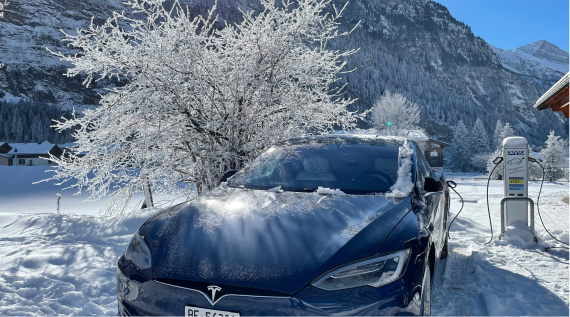
The colder weather always brings EVs into question. Ironically, there is no question, EVs do behave differently in the Winter months. The reality is far more nuanced and, frankly, far less dramatic than many outlets and fearmongers report.
As 99% of you reading this have the privilege of living in the UK, you’ll be no stranger to colder weather and frosty mornings. But with the right habits and a bit of know-how, we’re sure your EV can thrive in the Winter chill.
Do EVs lose range in winter?
The short answer is yes. EVs do lose range in colder temperatures. The chemistry inside an EV battery becomes less efficient in the cold, and it simply prefers being warm. Add in heated cabins, demisting windscreens and cold tyres, and you will see a reduction in range compared to summer driving.
The size of the reduction varies from car to car. As a broad guide, many EVs see a 15% to 30% drop in range during the coldest conditions.
That sounds dramatic until you put it into context. A long-range EV that comfortably delivers over 400 miles in summer will still offer well over 300 miles in winter. For most drivers, that is still far beyond their daily needs.
More importantly, this is not unique to electric cars. Petrol and diesel vehicles are also less efficient in winter, albeit not to the level of an electric vehicle. They just hide it behind fuel stops rather than percentage readouts. EVs also have the added advantage of no engine oil thickening or dealing with a ‘cold start’.
How do I protect myself against a range reduction?
Losing a little bit of range is unfortunately inevitable, but there are ways to protect yourself and get the best range possible.
If your car is plugged in at home, you can set it to warm itself before you leave in the morning. That means heating the battery and cabin using mains electricity rather than battery power. Not only do you have a nice, warm cabin when you get in, but you’ll see very minimal impact on your range. Most EVs allow you to schedule this via an app or the infotainment system. Set the car to be ready at a specific time and it will do the rest.
You will often hear advice about only charging between 20% and 80% for battery health. In reality, modern EVs manage battery protection themselves. Charging slows automatically at higher percentages to prevent damage. If you are driving a leased or salary sacrifice car, battery degradation over three years is negligible.
In winter, charging to 100 percent before longer journeys is sensible and practical. It gives you maximum usable range and peace of mind. With off-peak home tariffs, a full charge can cost little more than a few pounds, even for 300 to 450 miles of range. That value does not disappear in winter.
Some drivers also use insulated car covers to reduce overnight cold soak. It is simple, low-cost and surprisingly effective.
Driving habits that help you keep range in Winter
Winter range is influenced by how you drive, not just how you charge. A few simple adjustments make a real difference:
- Use traction or snow modes when available. They soften acceleration and reduce unnecessary energy spikes.
- Avoid aggressive acceleration (which you should be doing anyway!). EVs deliver instant torque. Use it smoothly and you will travel further.
- Keep tyre pressures correct. Cold weather lowers tyre pressure, increasing rolling resistance and reducing efficiency.
- Drive comfortably, not miserably. Forcing eco modes that remove heating often backfires. Switching heating on and off repeatedly uses more energy than maintaining a steady, comfortable cabin temperature.
A fantastic feature in EVs is regenerative braking, which prolongs the battery life by converting the energy from braking back into stored electricity. Familiarise yourself with how to adjust the strength levels of regenerative braking, so that you can adjust to the terrain.
Considering a heat pump?
Not all EVs are equal in winter. Some models come with a heat pump as standard. Others offer it as part of a winter pack. A heat pump is a far more efficient way of heating the cabin compared to traditional resistive heaters. In real terms, a heat pump can preserve around 5% to 10% of the range in cold weather. That is meaningful. If you live in colder parts of the UK, especially rural or higher altitude areas, a heat pump is absolutely worth prioritising when choosing your next EV. It must be specified at the point of order, as it cannot be retrofitted.
The cold, hard truth
EVs do lose range in colder months, and it’s undoubtedly a downside if you’re considering the switch. Here is the truth most people miss, however.
In winter, we tend to drive less. Fewer long trips, fewer holidays, fewer spontaneous road adventures. Even with reduced range, most EV drivers still have far more range than they need on a day-to-day basis. Winter EV ownership is not about compromise. It is about understanding the car and using it properly. Do that, and an electric vehicle remains one of the most comfortable, efficient and cost-effective ways to travel through the coldest months of the year.
And no scraping ice at 7am? That alone is reason enough.
At P+B, we’re passionate about supporting you throughout your EV journey. We offer tailored leasing options, including our outstanding electric car lease deals, that cater to your personal needs. If you’re considering making the switch to a more sustainable option, speak to our team today.
Share this post